Let’s start with the basics — What is nonverbal communication? Why should I deal with it, and if I should… where do I start?
What Is Nonverbal Communication and Body Language?
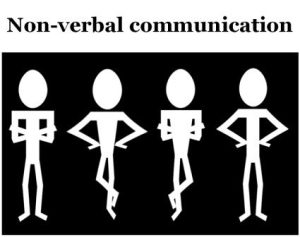
Nonverbal communication is communication without using words — simply put. Body language is a small part of this communication and mainly focuses on different body gestures and facial expressions.
At first, this may not sound like much — how can someone say something without using words? Can you say “I love elephants” without actually saying it?
But apparently, a lot can be read from body language. All kinds of information can be gathered from the following:
-
Facial expressions
-
Gestures
-
Posture
-
Touch
-
Tone of voice
-
Speaking speed
-
Volume of voice
-
Physical appearance
-
Stress in the voice
-
Personal space
-
Clothing
-
Hairstyle
-
Hygiene
-
Interaction with others (for example, how long you maintain eye contact)
- Timing (being late or early)
One of the reasons to study body language is to become more aware of this “hidden” communication and understand how it works. For example, how we perceive and interpret different behaviors and how we react to them.
We usually interpret and use nonverbal communication on a rather unconscious level. I don’t think you tell yourself: “I’m going to scratch my nose now,” or think about why you scratch your nose in the first place. You probably don’t even notice that it’s happening.
But Why Should I Care? Don’t I J
ust Have to Be Myself?
Just be yourself…
It’s about gaining control over your communication.
Wouldn’t you like to know how to communicate better in social interactions? Or how to recognize the mood and thoughts of others by assessing their actions and gestures?
See it as a great opportunity to further develop and expand your social skills. It’s not about fundamentally changing who you are or changing your personality. It’s more about gaining a better understanding of your social environment and acquiring the know-how to handle it more effectively.